Guides
Why Two of Your Facilities Read the Same Payer Differently
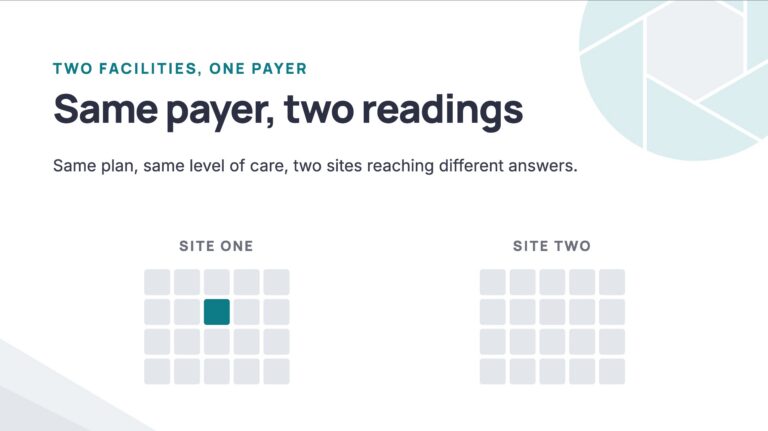
Two of your facilities admit a patient on the same plan, at the same level of care, in the same week. One reads the case
Two of your facilities admit a patient on the same plan, at the same level of care, in the same week. One reads the case
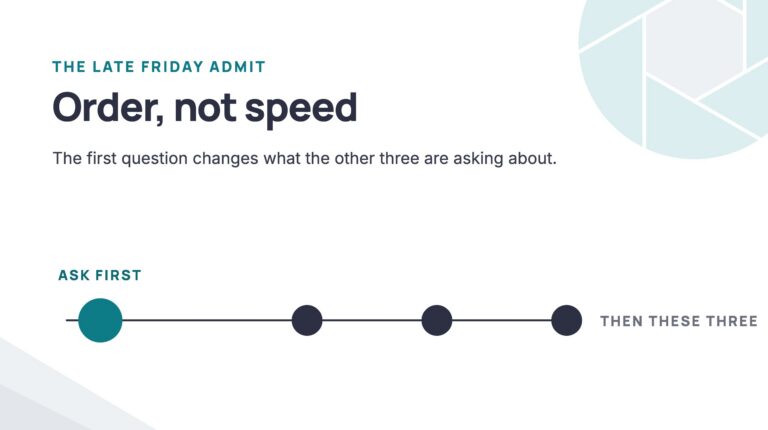
It is 4:45 on a Friday. A family is on the phone, the clinical need is obvious, and the plan is an out-of-network product nobody
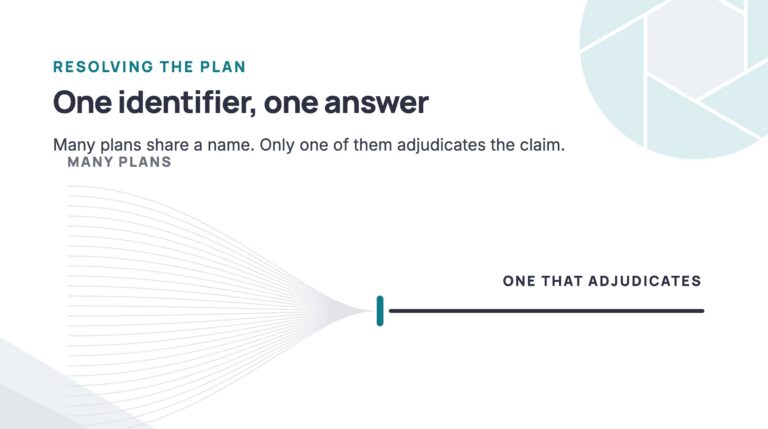
Ask what Blue Cross pays for residential treatment and the only honest first answer is a question. Which Blue Cross. The logo is shared. The
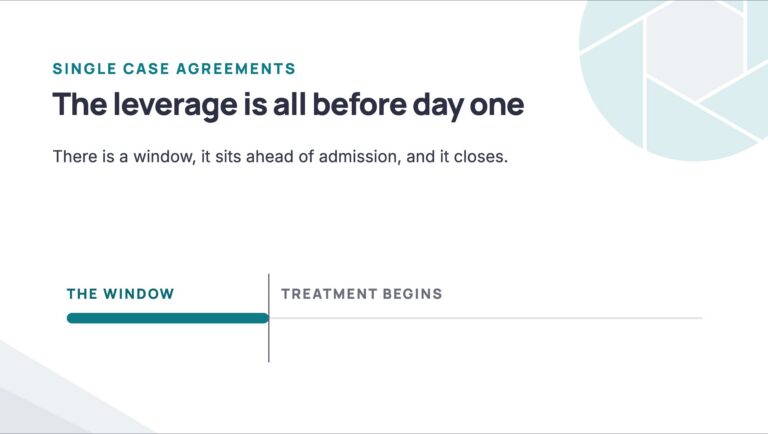
The clinical case is strong and the financial case is not. At the rate this payer usually allows for this level of care, the admission
Month end arrives and somebody rebuilds the claims picture from scratch. Again. The reconstruction takes two days, produces a number nobody disputes, and answers none
Somebody will tell you the new parity rule strengthened your position on out-of-network behavioral health. It is worth knowing that the rule they mean is
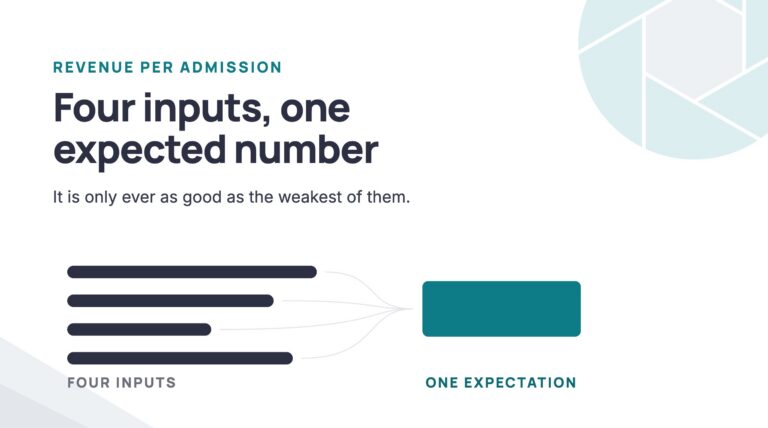
Most facilities can produce an estimate of what an admission will be worth. Very few can tell you whether last quarter’s estimates were any good.
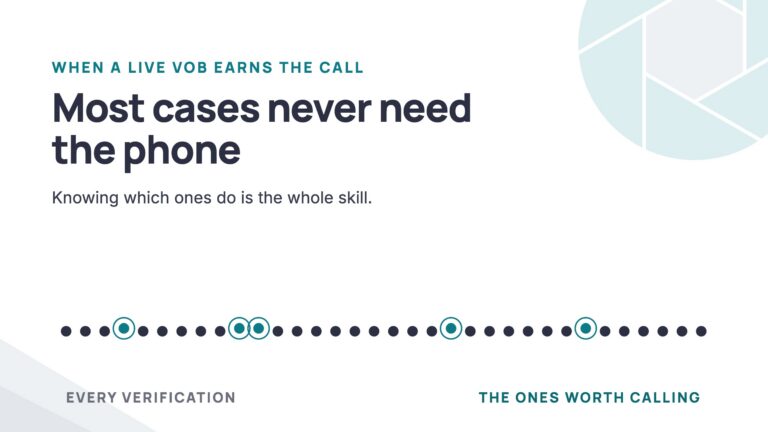
A verification team can work every case by phone. It will be thorough, it will be slow, and it will become the reason admissions cannot
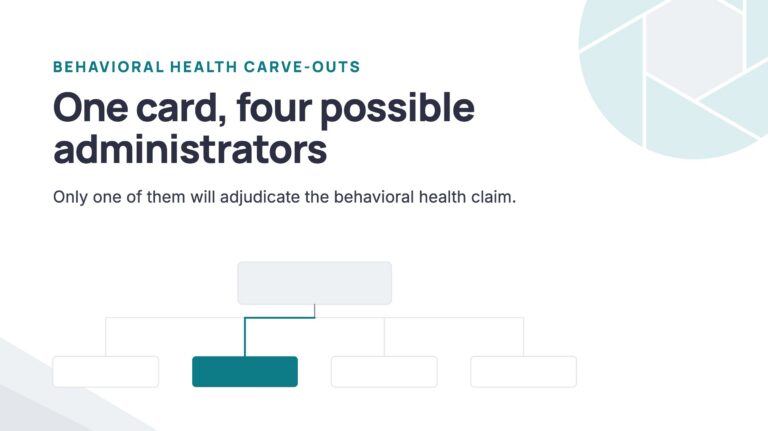
The eligibility response comes back clean. Coverage active, deductible mostly met, out-of-network benefits in place. Admissions passes it to the family as a yes. Six
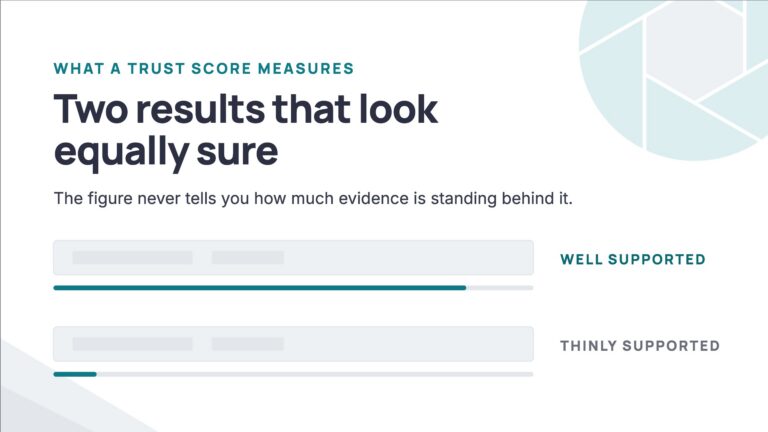
Two benchmark results sit side by side on the same screen. Both name a dollar figure for the same level of care. One is worth
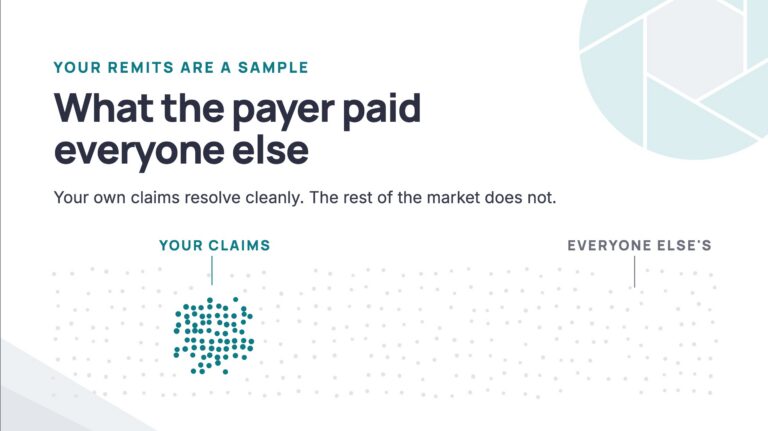
A facility director asks what a payer pays for PHP in their state. The billing manager can answer it for their own facility, from their
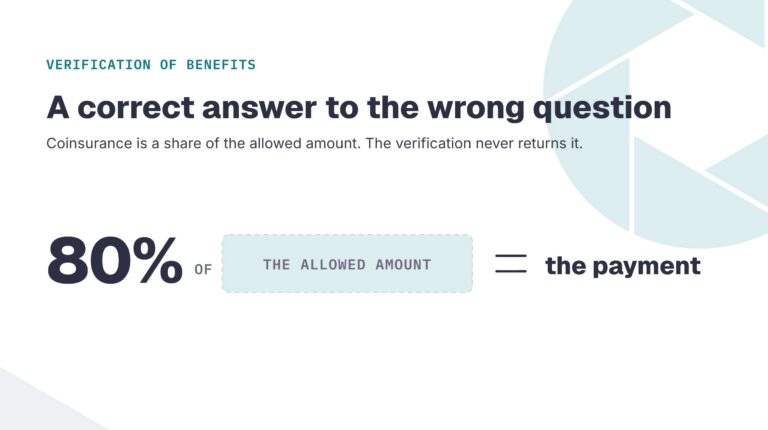
A verification confirms coverage and returns the coinsurance percentage. It does not return the allowed amount that percentage applies to, which is why an accurate verification and an unexpected payment are entirely compatible.
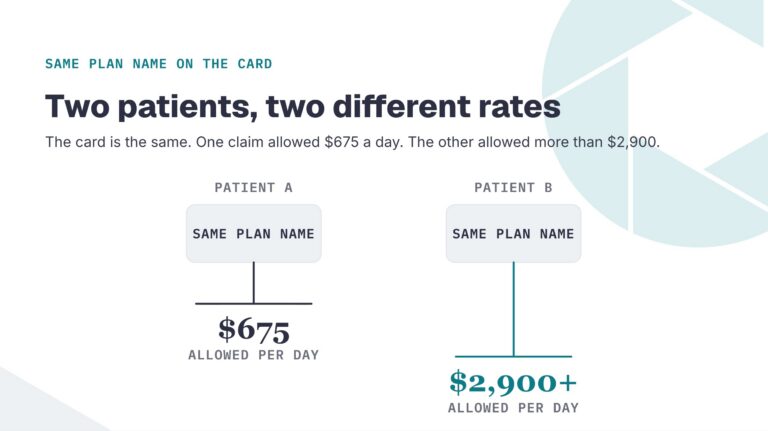
Two members of the same payer group can be reimbursed at rates that differ by more than four times for identical care. The four variables that move the number, and which of them you can know before you admit.
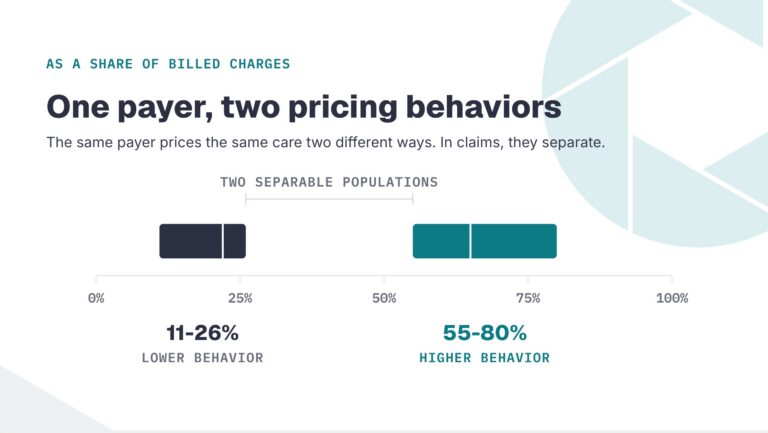
Out-of-network payers price behavioral health claims two distinguishable ways, and the gap is roughly threefold. What the claims show, and why no payer tells you which basis applies.
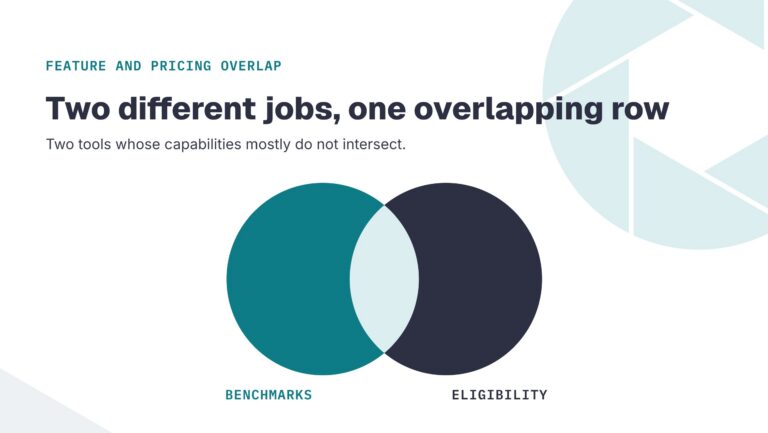
Both run real-time eligibility, but only one attaches an expected reimbursement rate. Where VerifyTX is the better tool, where it is cheaper, and which bottleneck each actually solves.