Where The Variance Actually Starts
You're the last to know, and the first to answer for it
Admissions makes the promise. Utilization review builds the plan. Then the remit hits your desk at 40% of what everyone assumed, and suddenly the variance is a billing problem. It was never a billing problem. It was an information problem, three departments upstream, months earlier.
Fixing that requires one thing: the same rate expectation, visible to admissions, UR, and billing, at the moment of the admit. That's what PayerLenz was built to put in place.

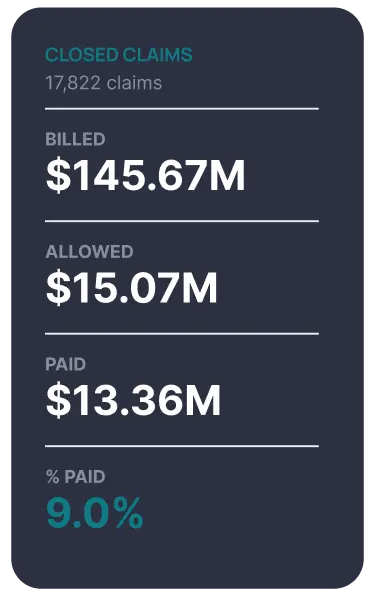
What everyone assumed, versus what the remit actually paid.
One Number, Front To Back
Where it fits your workflow
The Benchmark Side
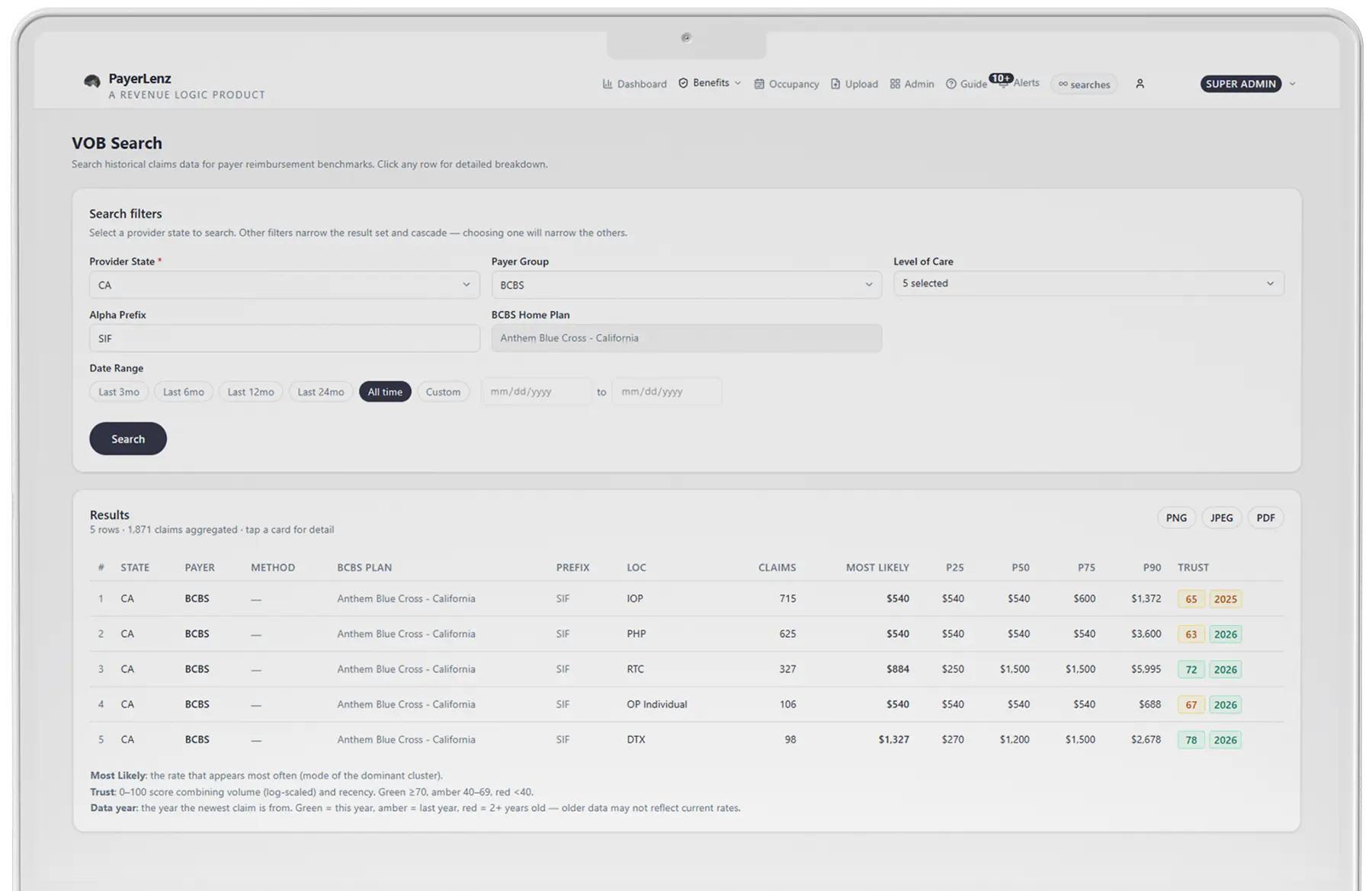
Every eligibility check returns the expected out-of-network reimbursement for that payer, state, and level of care, so front end and back end work from one number and "what did we think this would pay?" has an answer on file.
- Full percentile distribution (P25/P50/P75/P90), not a blended average
- U&C, MNRP, MRC, and NAP claims tracked separately
- BCBS resolved to alpha prefix and home plan
- Trust score on every benchmark, from a 250 payer-group pool
That matters most in payer conversations. When a payer quietly moves from the 80th percentile to the 40th, a trust-scored benchmark carries more weight than "we think you used to pay more," and it's the difference between noticing in 30 days and noticing in two quarters.

The AR Side
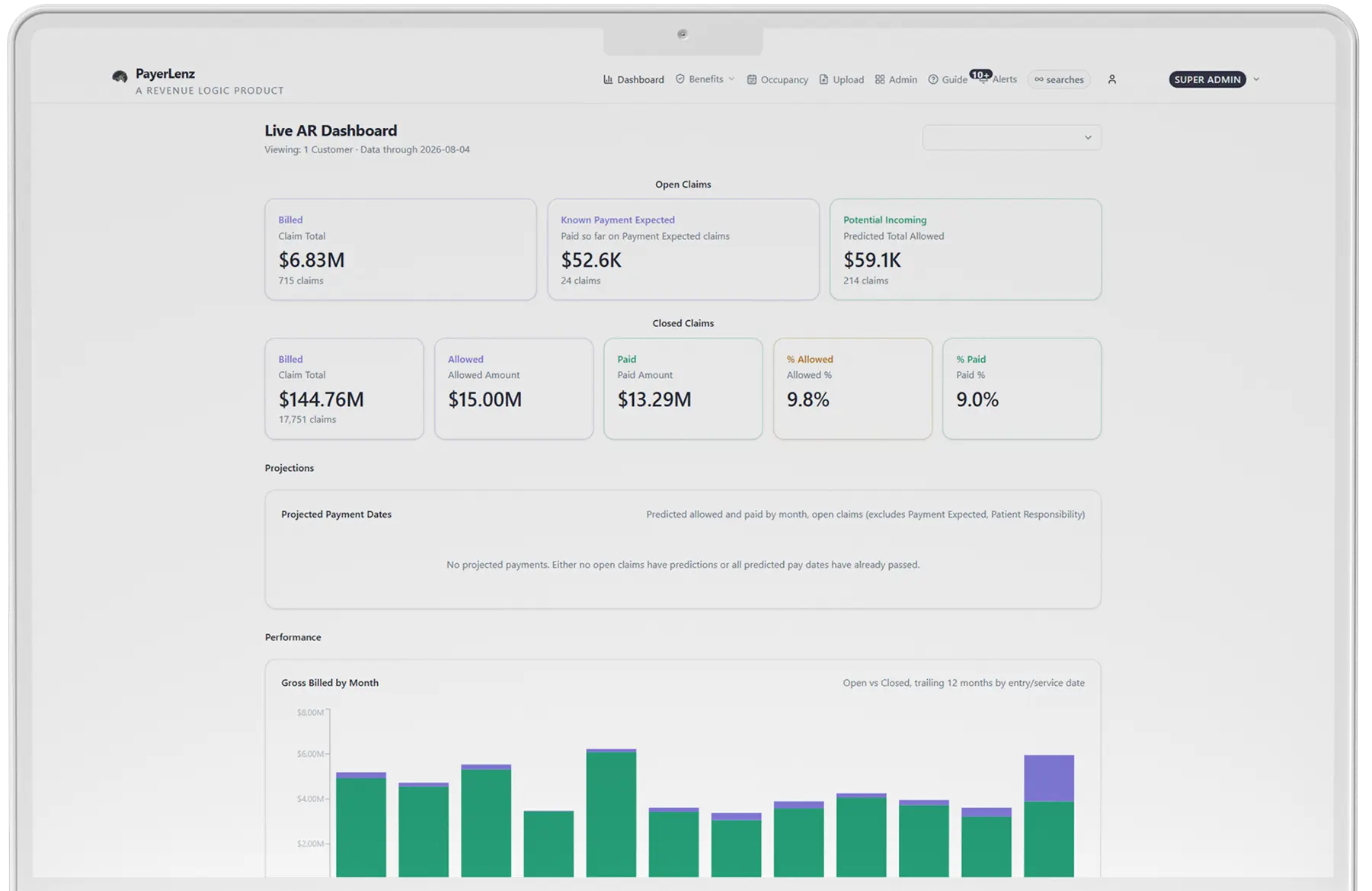
AR tracks against your own history, not a generic industry curve, with trend views so a bad month reads as a bad month and not a crisis.
- Billed, allowed, and paid on open and closed claims
- Allowed and paid percentages by payer
- Projected payment timing built from your actual remittance pattern
- Trend views across open and closed claims
There's also a discount attached to work your team already does. Your team touches claims data all day; contribute it de-identified and cut your plan fee up to 25% every cycle, while the pool your own benchmarks come from gets deeper at the same time.